
Ready to make a difference?
Join us on-site for a minimum of 2 weeks or collaborate remotely.
Your effort here counts exponentially — protecting Ostional has a
direct impact in the global mission for sea turtle conservation.
Do it Now in Costa Rica or Remote!
COSTA RICA VOLUNTEERING
We are located just 20 minutes away in Nosara. The project itself is situated in the heart of the Ostional National Wildlife Refuge, which has been protecting critical nesting habitats since 1984. Because Ostional is one of the rare places on Earth where the Arribada occurs—a synchronized mass nesting of hundreds of thousands of turtles—your work here is a vital contribution to global marine biodiversity. In this ecosystem, your time creates an exponential ripple effect across the world’s oceans.
The Ostional Project: Where Your Time is Multiplied
Based in Nosara, Costa Rica Volunteering spends year-long efforts on ground to improve the volunteer ecosystem, and the global conservation network is interconnected, your contribution has a "force multiplier" effect.
We bridge the gap between digital opportunities and on-site conservation, creating experiences that shift a person’s perspective on their responsibility to themselves and the environment.
Also you can help by donating funds, purchasing specific materials like sea turtle metal flipper tags—of which the project could use 5,000 annually rather than the current rationed 1,000—or by bringing these essential supplies directly to the station.
A Commitment to Work!
Space in this project is strictly limited, and the refuge relies on dedicated individuals to provide resources and labor to support the ongoing efforts of the project and professionals on site.
You will have free time to explore this tropical paradise on the weekends and plenty of extra hours to relax or learn Spanish on site, but your time spent within this facility is defined by a set behavior and a shared intention to protect the species.
Physical Demands: Tasks such as night patrols and data collection provide a real understanding of the physical demands of conservation.
OSTIONAL NATIONAL WILDLIFE REFUGE
The Ostional National Wildlife Refuge is located on the Nicoya Peninsula, in the cantons of Santa Cruz and Nicoya, approximately 360 km from San José.
It is where the Arribada occurs. Arribada is a natural phenomenon of synchronized mass nesting of olive ridley sea turtles (Lepidochelys olivacea). With an average of 200,000 turtles per arribada during the high season (rainy season), Ostional's Arribadas are the second largest in the world. The refuge has 510 hectares of land (from the high tide line to 200 m inland) and 8,054 marine hectares, including the mangrove between Punta India and Punta Guiones (18 km in length).
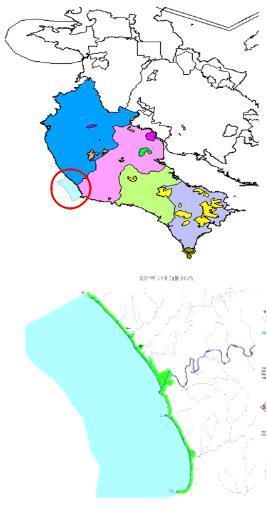
This area is characterized by its system of low hills. It is in a state of ecological recovery, with secondary forests that were planted after years of deterioration from cattle ranching. The landscape consists of mountains, beaches in small bays, mangroves, and numerous islands.
The refuge was created in 1984 with the purpose of protecting coastal and marine ecosystems, especially the reproductive and nesting habitats of sea turtles. Local communities benefit from and participate in the conservation process through sustainable resource management, research, monitoring, ecotourism, and environmental education.
Ostional is a place far from urban centers where volunteers will be in direct contact with nature. The volunteering opportunity here is for people who love nature and want to live in it, with all its difficulties and adversities.
TURTLES IN OSTIONAL
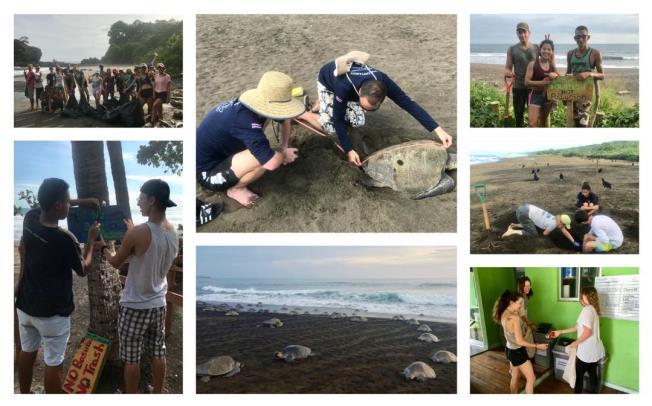
The primary mission of the Ostional Wildlife Refuge is to conserve and protect sea turtles. There are 7 species of sea turtles in the world, 5 in Costa Rica, and 3 that nest in Ostional. These three are the leatherback turtle (Dermochelys coriacea), green/black turtle (Chelonia agassizii), and the olive ridley turtle (Lepidochelys olivacea), all considered endangered or vulnerable species. In Ostional, the most common nests are those of the olive ridley turtles. Leatherback and green turtle nests are rare and are protected in the hatchery to ensure a higher survival rate.
The Arribada, the synchronized mass nesting of the olive ridley turtle, occurs approximately every month. The population of each Arribada varies, with more taking place during the rainy season. Each Arribada lasts 4 to 10 days, again depending on the season. The science behind the arribada is still being studied and the reason, timing, and factors affecting it remain unknown.
Ostional is an exception in the Inter-American Convention (IAC) for the Protection and Conservation of Sea Turtles, and the community legally harvests olive ridley turtle eggs. The Ostional Integrated Development Association (ADIO) is in charge of the harvest and is allowed to harvest only the first nests of the Arribada, which have been proven to have the lowest probability of survival. They received their first permit in 1987, and it is renewed annually.
The legal harvesting of eggs contributes to the conservation of olive ridley turtles. It decreases nest density and illegal egg harvesting. ADIO helps maintain the olive ridley habitat, protects hatchlings, provides local security, and assists with volunteer activities.
VOLUNTEER ACTIVITIES
Like many protected areas, Ostional does not have sufficient resources to hire enough staff or invest in new technologies to support officials. The refuge relies on the support and help of volunteers to effectively undertake important conservation work.
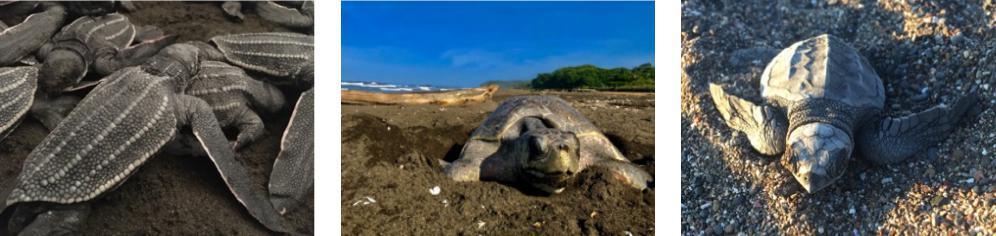
Within the refuge, volunteers work under the guidance of volunteer coordinators on activities such as sea turtle monitoring and conservation, maintenance of facilities related to sea turtle conservation and the refuge station, and beach cleanups. Volunteers work an average of three hours during the day and four hours at night. Many activities include a lot of physical work. Accommodations can be made for those who are less physically fit.
Research
The research program is vital for the protection of sea turtles. It consists of collecting data on population dynamics and hatching success. The method has been developed globally over the years and is used universally. All collected data helps develop appropriate conservation strategies.
Volunteers conduct daily night patrols in groups led by a leader (local research assistants or long-term volunteers). Groups led by non-local leaders must have at least 3 people per group. During the patrols, volunteers will measure the turtle, count the eggs, check for any anomalies, and tag the turtle.
Beach Cleanup and Recycling
Beach cleanup and recycling is a very important activity to maintain a clean nesting habitat for sea turtles. Recyclable items are returned to the station, sorted by type, and weighed.
Recyclables such as plastic bottles, aluminum cans, and glass are sorted into designated recycling bins.
SCHEDULE
Arrival day is a free day since most volunteers have traveled for hours. Upon arrival, volunteers will check in at the refuge. They will be given keys, introduced to the staff, and given a tour of the station.
Orientation and beach training take place the following day, led by the volunteer coordinator, research assistant, or a park ranger.
Weekdays
Weekly schedules will be posted each week so volunteers are notified in advance. Activities vary every week, and volunteers are expected to be flexible to any changes. The following schedule is extremely general.
- 08:00 Breakfast
- 10:00 Morning work includes station maintenance, beach cleanups, data entry, and other activities depending on the weather and the week. (1-2 hours)
- 12:00 Lunch
- 15:30 Afternoon work includes station maintenance, beach cleanups, data entry, and other activities depending on the weather and the week. (1-2 hours)
- 18:00 Dinner time is up to the volunteer. Dinner will be prepared and volunteers are free to heat it up and eat whenever they want.
- 19:00 Night patrol times depend on the tide, lunar cycle, and daytime activities. (4 hours)
Volunteers will have enough rest time. Some weeks, volunteers will participate in early morning activities (05:30), and on those days there will be no night patrols.
During the arribada, daytime work will be reduced and shifts will be assigned to volunteers during the night.
Weekends
Weekends are free days; however, if the arribada coincides with the weekend, the free days will be shifted to the two days following the arribada.
MEALS
Meals are prepared by our friendly local cooks. Any dietary restrictions, such as allergies and vegetarian/vegan diets, can be accommodated. Breakfast and lunch times are expected to be strictly followed, and it is important to remember that food will be shared among volunteers, rangers, and other staff members.
Meals will be prepared 3 times a day, 7 days a week. There will be fruit, fresh fruit juice, and cold tap water available outside of meal times. If the volunteer wishes to bring food from home or purchase locally, they are free to do so.
If the volunteer wishes to eat out (e.g., have dinner at a restaurant), they must notify the staff or cook beforehand to avoid excessive food waste.
OSTIONAL COMMUNITY
Ostional is a remote, rural village with very limited access to various services. There are only two corner stores and three restaurants/food establishments. There is a medical clinic open every Monday.
The local people are very sociable and involved in the conservation of the refuge. Volunteers will work primarily at the station and on the beach. However, there will be opportunities to clean up the community and work with local research assistants.
Many volunteers build friendly relationships with locals through volunteer activities and by visiting the stores/restaurants.
CLIMATE
Ostional is located in a relatively warm part of Costa Rica. The rainy season is from July to November, the dry season is from January to April, and the months in between are transition seasons. During the dry season, the maximum temperature can reach up to 35°C / 95°F, and during the rainy season, the maximum temperature is 30°C / 86°F. For both seasons, the minimum temperature can drop to 20°C / 68°F. The temperature difference between day and night can be drastic, sometimes requiring both short and long-sleeved shirts in a single day, even in the hottest months of the year (March and April).
During the rainy season, it rains heavily. Ostional is located between two rivers, and during the rainy season, especially after particularly heavy rain, the rivers flood, making it impossible to cross.
MEDICAL EMERGENCIES
In case medical assistance is needed, the nearest doctor and pharmacy are located in Nosara (10km / 6mi away), and the nearest hospital is in Nicoya (65km / 40mi away). Transportation will be provided immediately, usually a car driven by a ranger. Please let us know in advance if you have any chronic illnesses or medical conditions.
ATTRACTIONS
Volunteers can enjoy various activities during their free time. The beaches of Ostional, Nosara, Pelada, Guiones, and San Juanillo are all different and beautiful. Activities such as surfing, canopy tours, zip-lining, ATV rides, mangrove tours, fishing, scuba diving, boat rides, and much more are available for the enjoyment of volunteers in nearby towns during free days. Traveling to Samara or Tamarindo, two famous tourist destinations in Costa Rica, is also another option. Volunteers can also simply relax and enjoy the calm and tranquility of Ostional, far away from city life and tourists.
Transportation to the Project
You can reach the Ostional Sea Turtle Conservation Program using any of the following transportation options:
1. Direct Private Shuttle
A private shuttle from San José International Airport (SJO) directly to the project can be arranged upon request. Prices start at approximately US$240 per vehicle. This is a good option for groups traveling together with several pieces of luggage.
2. Domestic Flight
Fly with Sansa Airlines from San José to Nosara Airport (NOB). This is our recommended option. Flying with Sansa significantly reduces travel time and offers spectacular views as you land at Nosara Airport (NOB) in the beautiful Nicoya Peninsula. From there, it's just a 20-minute tuk-tuk ride to the project.
3. Direct Bus from San José to Nosara
There is one direct bus from San José to Nosara each day, departing at 15:00. Once you arrive at the Nosara Bus Terminal, it's just a 20-minute tuk-tuk ride to the project.
4. Bus via Nicoya
Take a bus from San José or Liberia to Nicoya, then transfer to a bus heading to Nosara. We recommend taking one of the morning departures from Nicoya (04:45, 10:00, or 12:30). On Sundays, buses are more limited, with recommended departures at 10:00 and 12:30. Choosing one of the earlier departures helps avoid missed connections and the possibility of needing to stay overnight. The journey from Nicoya to Nosara takes approximately 2–3 hours, depending on road conditions. Once you arrive at the Nosara Bus Terminal, it's approximately a 20-minute tuk-tuk ride to the project.
Arrival in Nosara
Whether you arrive by air or bus, the final leg of your journey is a 20-minute tuk-tuk ride to the project. The fare is approximately US$20, paid directly to the driver in cash. Once your placement has been confirmed, we'll provide the complete transportation details, including bus terminal names, guidance on terminal transfers, booking websites, and other practical information to help you plan your journey. Throughout the process, you'll also have access to our Travel Concierge at no additional cost. We'll be available to answer your questions and help ensure you have a smooth arrival to this remote location.
SECURITY
Ostional is a very small and safe community. However, since the administrative office is a public government facility, there are many visitors. Volunteers are responsible for their own belongings, especially valuables. The gates to the station and the door to the dormitory building will be locked at night. The dormitories lock automatically and include individual lockers for storing valuables.
Crime in Ostional is rare. It is a safe community and there are guards on the beach at night. However, as an extra precaution, volunteers should never be alone, especially at night.
HOMESTAY OPTION
Staying in a homestay with a local Ostional family is another option available for volunteers. Three meals will be provided each day and it is a great opportunity to immerse yourself in the "Tico" lifestyle. Most houses are a 5-10 minute walk from the station.
FACILITIES
Accommodation at the station is prioritized. When there are more than 12 volunteers, those who cannot be accommodated in the station dorms will automatically be placed in homestays. If a volunteer prefers a homestay for special reasons, please inform us in advance.
The station is very simple but has all the necessities. The volunteer dormitory building has two dormitories. Each room has 3 bunk beds (6 people per room), 2 bathrooms, 2 showers, and air conditioning.
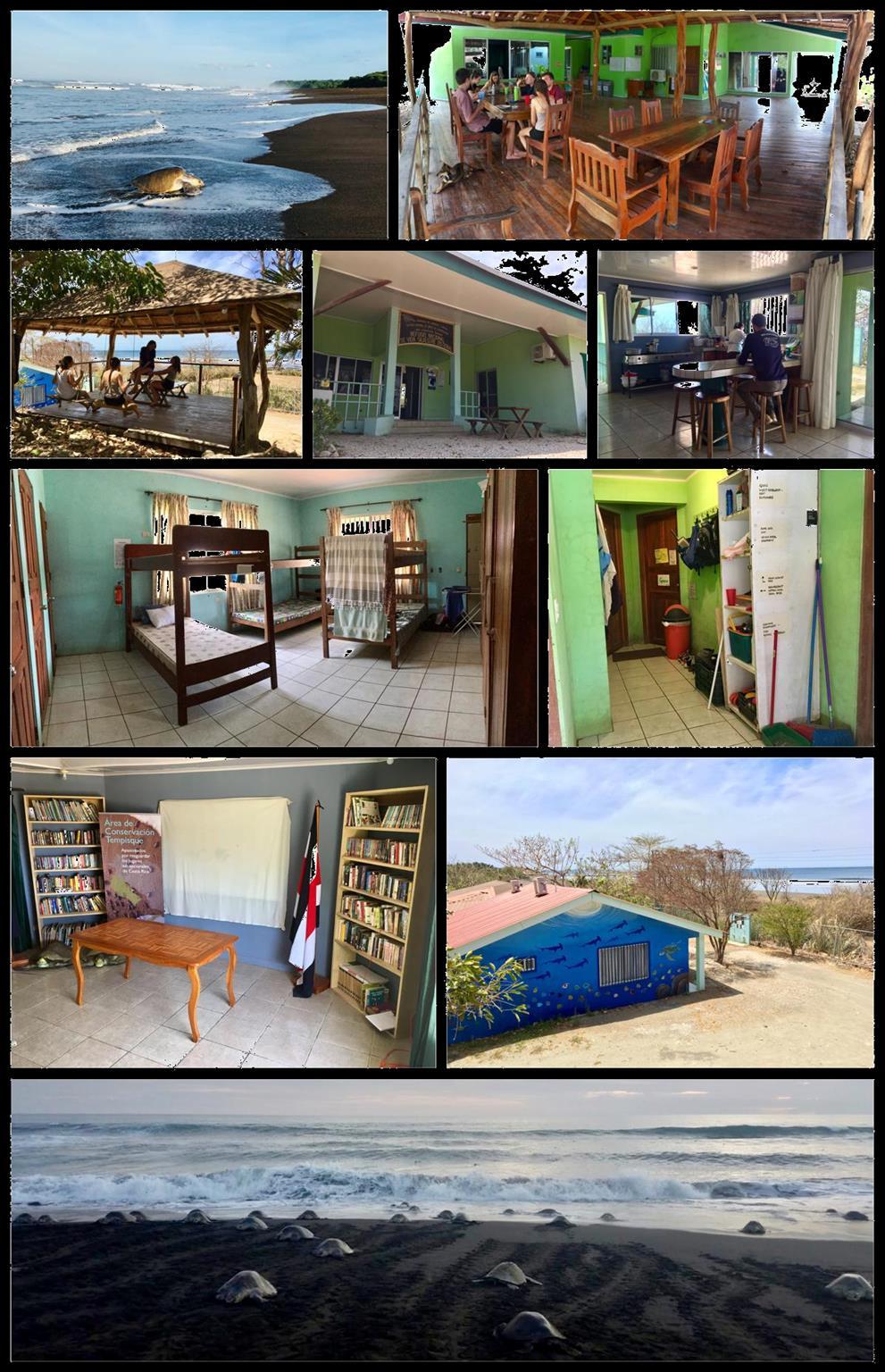
Each volunteer will receive their own keys to their dorms. The terrace is a common space used for dinners, meetings, workshops, and general relaxation. The refrigerator in the kitchen is available for volunteers to store their personal food. The library has books in several languages, and there is a "take a book, leave a book" system. There is a designated sink for washing clothes and shared clotheslines. A treehouse-gazebo is available for volunteer relaxation; wireless internet and telephone access are available at all times.
SUGGESTED PACKING LIST
The following list is a suggested packing list, but there are several items required to participate in activities. Since Ostional only has two small stores, buying certain items may be difficult.
- Clothing: t-shirts (short and long), shorts, pants, sweatshirts, socks, underwear, sleepwear. Dark colored clothing is required for night patrols.
- Waterproof jacket (May-December)
- Closed-toe shoes (required for night patrol) (sneakers, hiking shoes, water shoes, Crocs are accepted)
- Sandals and Flip Flops
- Swimsuit
- Towels
- Insect repellent
- Sunscreen
- After-sun lotion
- Shampoo, conditioner, soap
- Toiletries
- Laundry detergent (eco-friendly preferred)
- Prescription medicine
- Red flashlight or headlamp (mandatory; only red lights are accepted)
- Hat / cap
- Water bottle
- Waterproof phone case
- Padlock for lockers (necessary to use the locker for safekeeping)
SUPPLIED EQUIPMENT
The following equipment will be provided, and volunteers are expected to familiarize themselves with each item used for different activities.
- Field notebooks
- Pencils
- Clipboards
- Measuring tapes
- Tally counters
- Stopwatches
- Sea turtle metal flipper tags
- Shovels
- Rakes
- Baskets and buckets
- Latex gloves
- Laptop for data logging
REFUGE AND STATION RULES
- Check in at the refuge upon arrival.
- The consumption of alcoholic beverages and any type of drugs is strictly prohibited within Ostional. Refusal to comply will result in immediate exclusion from the program.
- Smoking must take place in open areas and cigarettes must be disposed of in trash cans. Smoking on the beach is illegal and littering on the beach is not tolerated.
- It is mandatory to respect meal times. Please inform the cook if there are any dietary restrictions (allergies, vegetarian, vegan, etc.). Serve reasonable portions and always be considerate of others.
- Do not bring food or drinks into the dorm rooms to avoid infestations of cockroaches, ants, rats, etc. There are designated areas for eating and cooking.
- Keep dormitories and common areas clean and tidy.
- Wash thoroughly when returning from the beach to avoid excess sand at the station. Outdoor showers are available to wash off sand.
- Keep windows, mosquito nets, and curtains closed at night.
- Save energy when leaving buildings: turn off fans, air conditioning, and lights.
- Wash, dry, and put away your dishes immediately after use.
- Volunteers will hand-wash their own clothes.
- Keep station dormitory doors closed at all times.
- Avoid bringing strangers into refuge buildings, dorms, or offices without prior authorization.
- Use the red light when patrolling the beach at night. The use of white light or flash cameras is prohibited.
- Leaving Ostional during free days is the responsibility of the volunteer. Volunteers must inform the volunteer coordinator where they want to go and if they will not need meals.
- Vehicles located in the refuge area are exclusively for the use of government staff.
- Ocean currents at Ostional Beach are very strong. Swimming/surfing is not allowed during the volunteer's stay to avoid putting his health at risk. Listen to instructions from the volunteer coordinator and local staff on when and where it is safe to enter the water.
- Relationships between volunteers and refuge staff are strictly professional. Avoid situations that may affect the work environment or require severe warnings.
Our sea turtle research and protection would be impossible without the hard work and contribution of volunteers. We hope volunteers come with the mindset and hope of protecting sea turtles, strengthening our local communities, promoting environmental education, and striving to protect our beautiful and precious environment. Volunteer at the Ostional Wildlife Refuge to help, learn, and have the experience of a lifetime. We guarantee you will never see the world the same way after this adventure.
With your support, we can join forces to continue our essential work of protecting sea turtles and their ecosystems.
REQUIRED DOCUMENTATION
- Copy of your passport
- Medical insurance covering the full duration of your program
- Criminal record / background check
- Accident insurance with repatriation coverage from your home country, or equivalent coverage through Costa Rica's Instituto Nacional de Seguros (INS)
⚠️ PD: you are expected to bring a work environment mindset, not a tropical vacation mindset. If you prefer a more relaxed experience, please inquire with our associate at hello@yogaorsurf.com, which specializes in wellness and adventure packages.
CONTACT
Email: hi@costaricavolunteering.com
WhatsApp: +506 8644 8719